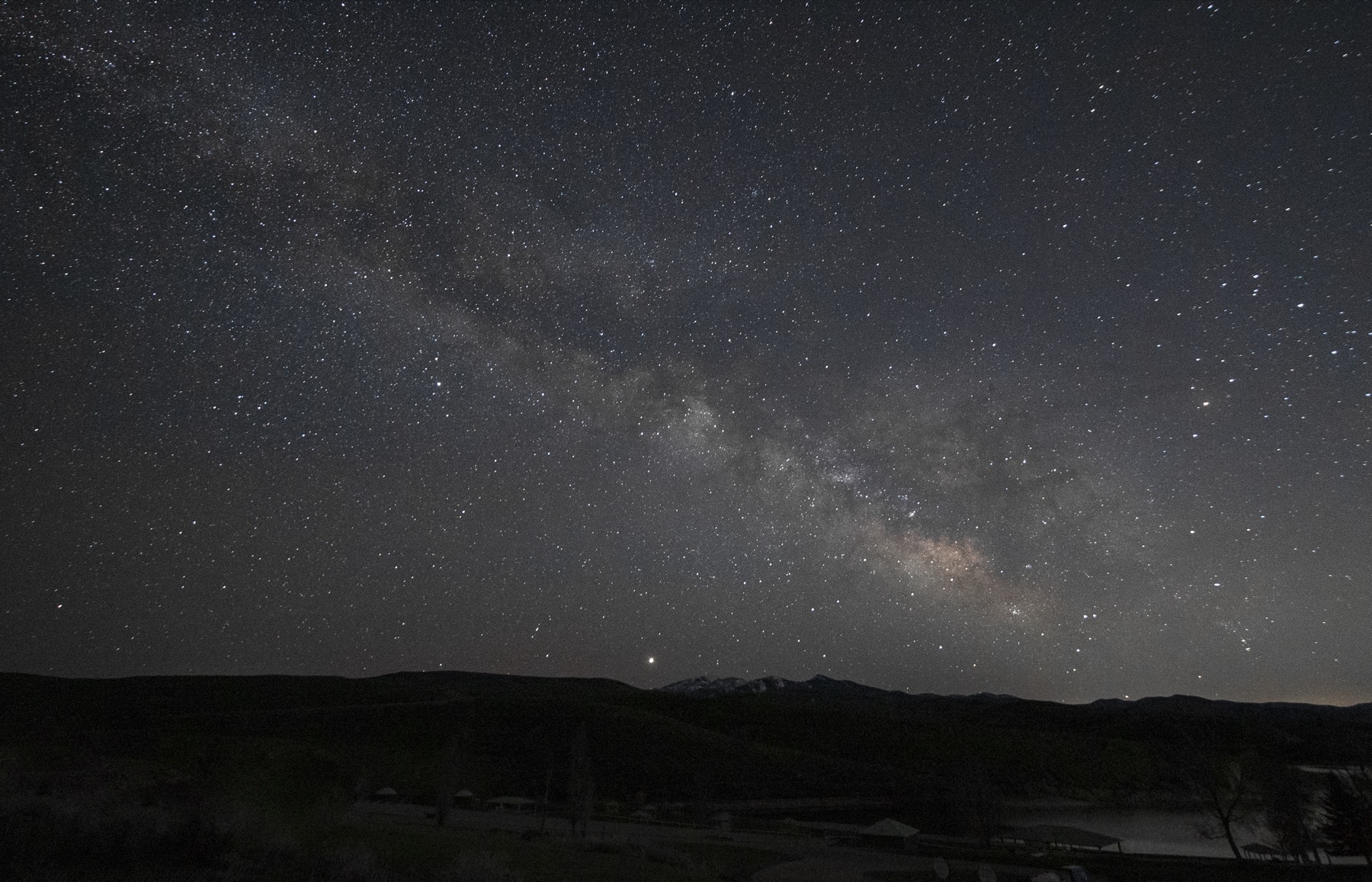
A sky most people have never actually seen
The Milky Way has not gone anywhere. Every human being who ever lived before the twentieth century saw it routinely — a broad, glowing river of starlight arching across the night. What changed is artificial light. Studies of satellite data published in Science Advances estimate that around 80 percent of North Americans live under skies too bright to show the Milky Way at all.
Bryce Canyon National Park sits at 8,000 to 9,100 feet on the Paunsaugunt Plateau in southern Utah, far from any major city. It was certified as an International Dark Sky Park in 2019, and on clear moonless nights its skies reach a limiting magnitude of about 7.4 — meaning the faintest stars visible to a sharp naked eye here are roughly 15 times dimmer than anything visible from a typical suburb. On the Bortle dark-sky scale, Bryce rates a 1 to 2 out of 9. Most city dwellers live under Bortle 7 to 9.
The practical result: from the canyon rim on a dark night, the Milky Way is not a faint smudge you have to hunt for. It is the single most obvious thing in the sky.
What the galactic core actually looks like to the naked eye
Set expectations honestly: your eyes are not a camera. Long-exposure photos show saturated pinks and oranges because sensors accumulate light for many seconds. Human night vision works differently — but what you see at Bryce is, in its own way, more striking than any photo. Expect:
- A bright, textured band stretching horizon to horizon, clearly brighter toward the constellation Sagittarius in the south, where you are looking directly into the center of our galaxy some 26,000 light-years away.
- Dark rifts and lanes — the Great Rift splitting the band in two is obvious. These are clouds of interstellar dust silhouetted against billions of background stars.
- Visible structure in the core region: knots, bulges, and star clouds you can trace with your eye, not just a uniform glow.
- Enough combined starlight to cast a faint shadow. On the darkest moonless nights, hold your hand over a white surface and you may detect its outline by Milky Way light alone — a genuine Bortle 1 phenomenon.
Give your eyes 20 to 30 minutes to fully dark-adapt, avoid white light (including phone screens), and the detail keeps improving the longer you look. Our guide to photographing the Milky Way covers how to capture it without ruining your night vision.
When can you see the Milky Way at Bryce Canyon?
The Milky Way band is technically overhead in some form every night of the year. What people mean by “Milky Way season” is the visibility of the galactic core — the bright, photogenic center in Sagittarius. From southern Utah’s latitude:
February – April
The core rises in the pre-dawn hours. Visible, but you will be setting a 2–4 a.m. alarm. Best for dedicated photographers.
May – September
Prime season. The core is up during normal evening hours, the weather is mildest, and June through August evenings put the core high in the south right after dark.
October
Last call. The core sits low in the southwest at dusk and sets early. Still beautiful, and crowds are gone.
November – January
The core is behind the sun. The winter Milky Way (Orion’s arm) is still lovely at Bryce, but it is a subtler band, not the dramatic core.
The other variable that matters as much as the calendar is the moon — a bright moon washes out the core even at Bryce. See the full month-by-month season guide and the moon phase planning guide before you pick dates.
Why see it with a guide?
You can absolutely walk to the rim on your own — and our viewpoint guide tells you exactly where to stand. A guided tour adds what is hard to get on your own:
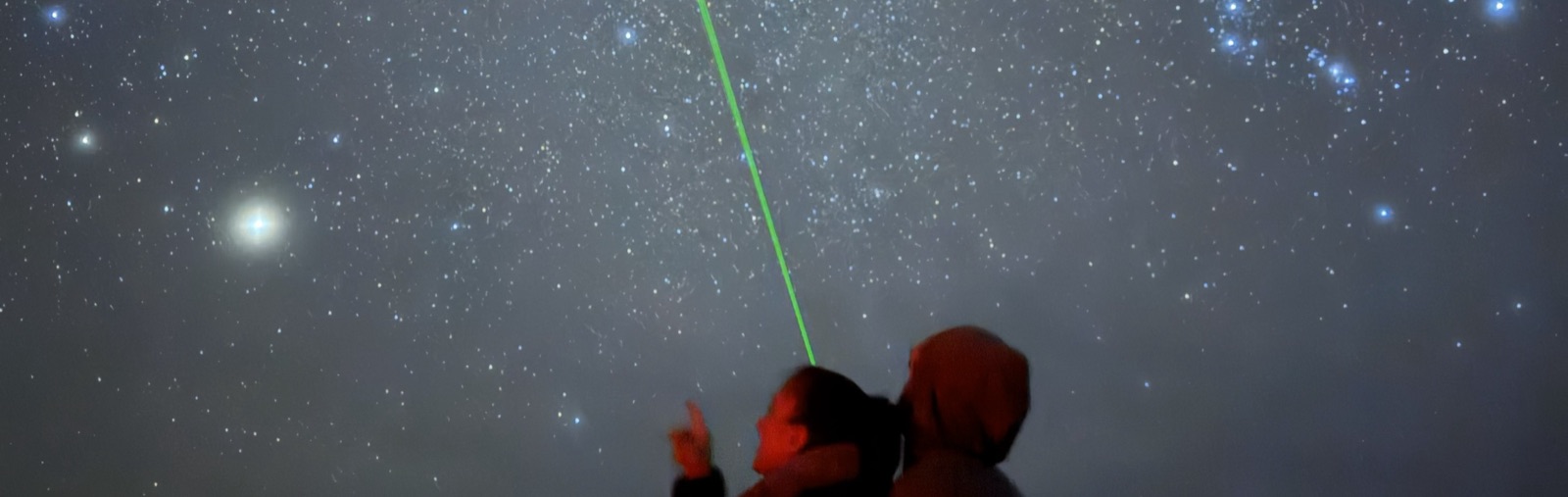
- Timing done for you. Guides schedule around moonrise, core position, and astronomical twilight so you arrive when the sky is actually at its best.
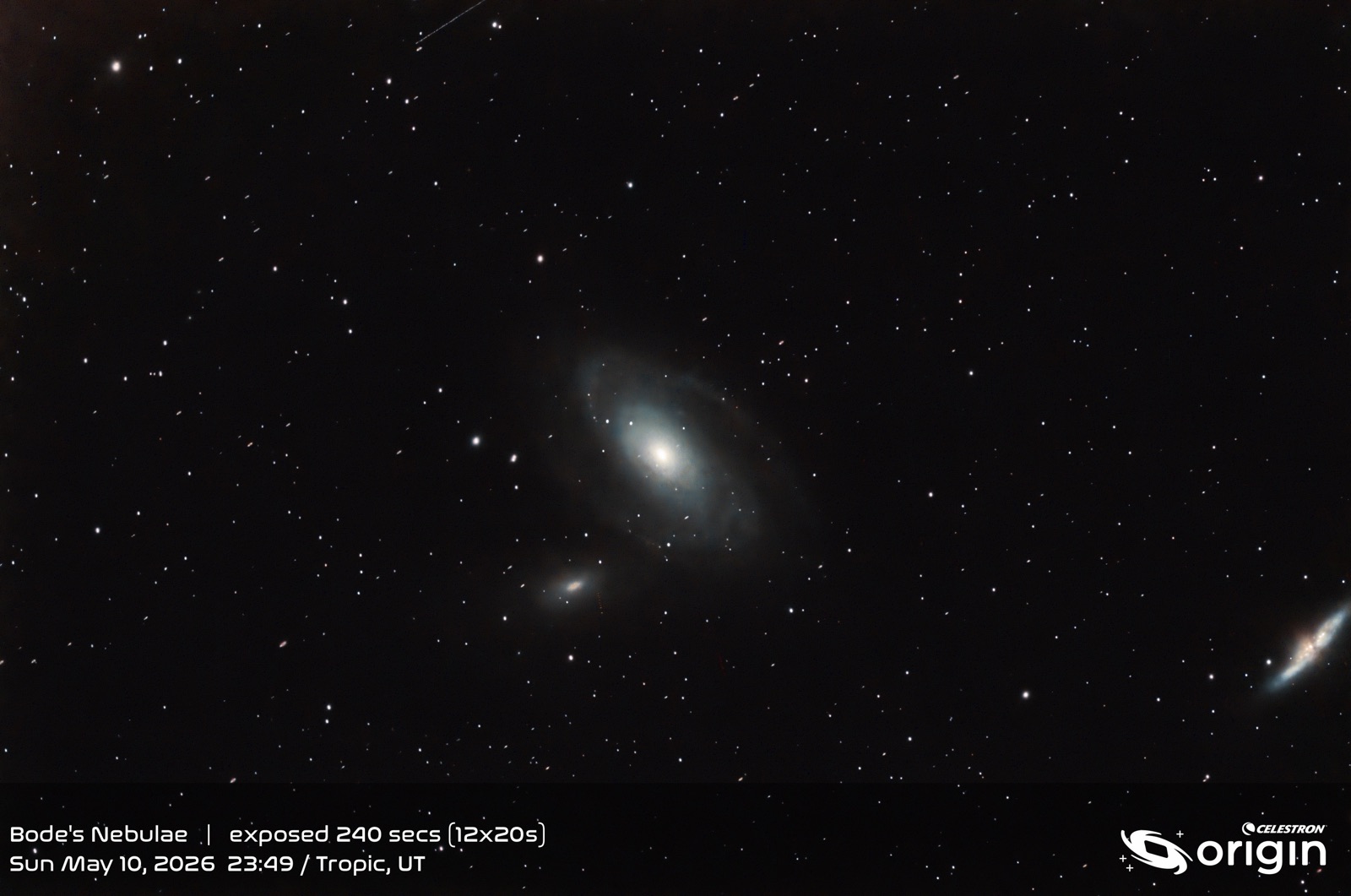
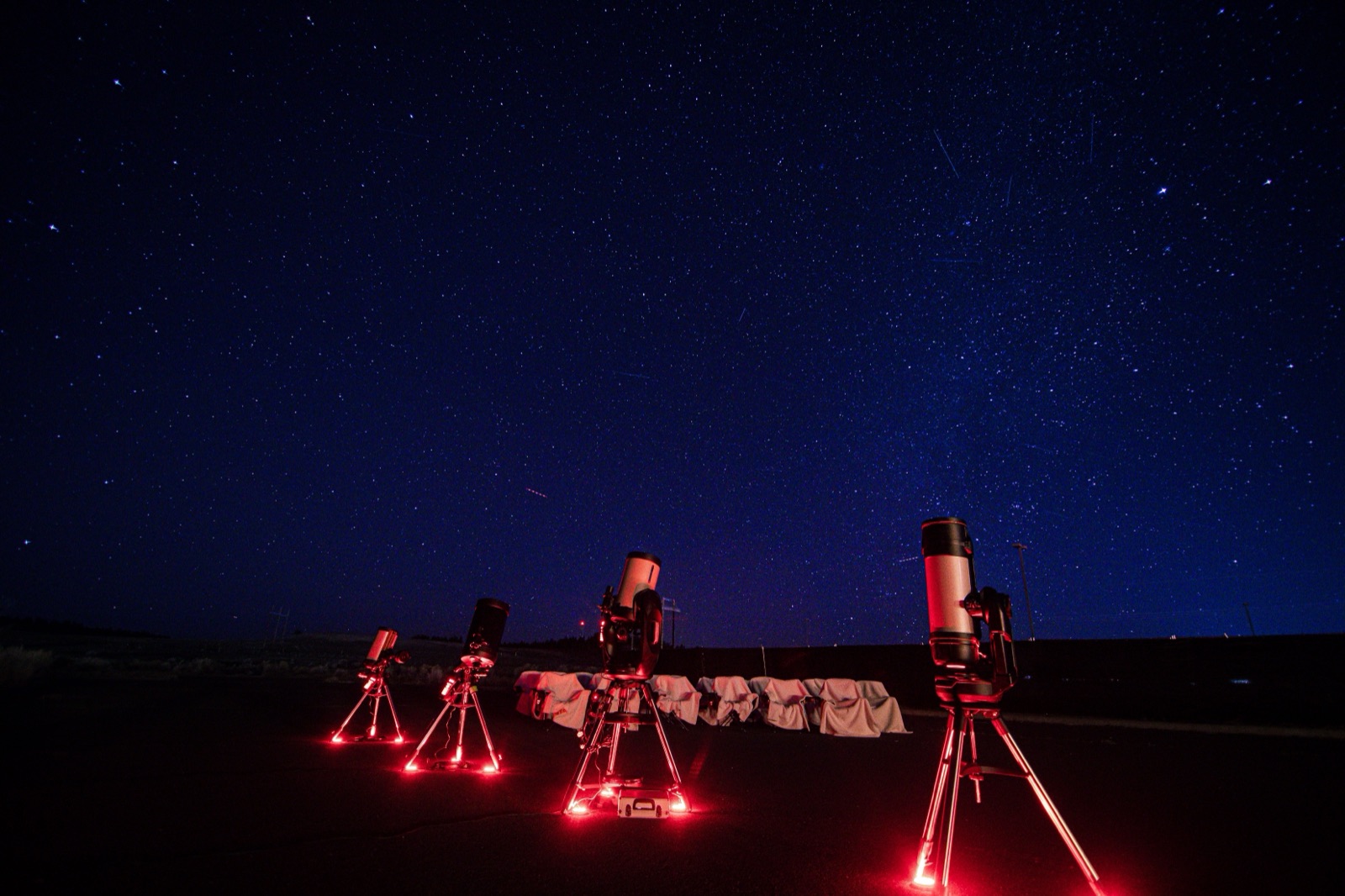
- Telescopes and trained eyes. The naked-eye Milky Way is the headline, but a telescope under magnitude 7.4 skies turns globular clusters and nebulae from theory into things you have personally seen.
- Navigation and safety at night. The rim is unlit, the edges are real, and at 8,000+ feet the temperature drops fast after sunset — even in July. Local guides know the terrain in the dark.
- The story. Knowing you are looking at the dust lanes of your own galaxy from the inside changes what you see.
Stand under it with someone who knows the sky
Bryce Canyon Stargazing runs guided night tours with local guides and telescopes — they handle timing, location, dark adaptation, and the story of what you are looking at, so you just look up.
Check Tour Availability
Start planning
- Milky Way season in Utah — the definitive month-by-month visibility guide.
- Moon phase planning — why the moon matters more than anything, with 2026 new moon dates.
- Where to see it — the best rim viewpoints facing the galactic core.
- The Bortle scale explained — what light pollution hides, level by level.
- Photograph the Milky Way — phone and camera settings that work.
- Milky Way FAQ — quick answers to the most common questions.